 Image source, MILFORD BUILDINGS PRESERVATION TRUST
Sweaty palms. A pounding heart. The ball resting on the spot.
Few moments in sport carry more pressure than a penalty.
Sometimes, a place in the next round of the World Cup comes down to a single kick from 12 yards: Football's ultimate test of nerve. Carrying the hopes of a nation.
Heroes are made. Dreams are shattered.
Yet before penalties existed, they were simply an idea dreamed up by a goalkeeper from County Armagh, Northern Ireland.
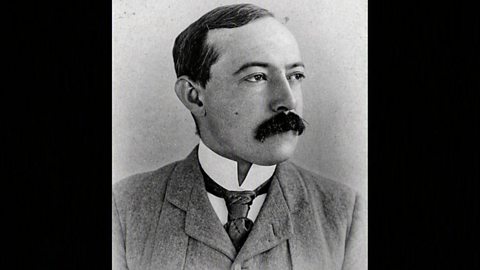
His name: William McCrum.
From Armagh to the football field
William McCrum was born in 1865 in Milford, County Armagh. The son of a wealthy linen manufacturer, he could easily have followed the family business.
Instead, he loved football.
McCrum played as a goalkeeper for Milford FC. During the first season of the Irish Football League, Milford finished bottom of the table after conceding more than 60 goals in just 14 matches.
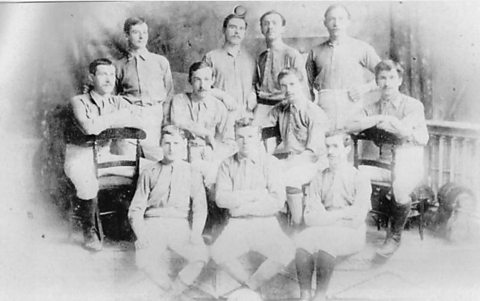 Image source, MILFORD BUILDINGS PRESERVATION TRUST
If nothing else, it meant McCrum had plenty of opportunities to think about how football could be improved, while repeatedly retrieving the ball from behind the goal.
Time and again, he saw attackers pulled back, tripped, hacked down or blocked just as they were about to score.
Back then, the punishment for a foul near goal was simply a free-kick, even if a defender had deliberately prevented a certain goal.
The punishment often seemed too small for the offence.
To McCrum, it wasn't fair. So he came up with a bold solution.
A groundbreaking proposal
If a defender deliberately prevented a likely goal, the attacking team should receive a single shot at goal from 12 yards away.
In 1891, McCrum's proposal was tabled to football's rule-makers through the Irish Football Association.
Many people were horrified.
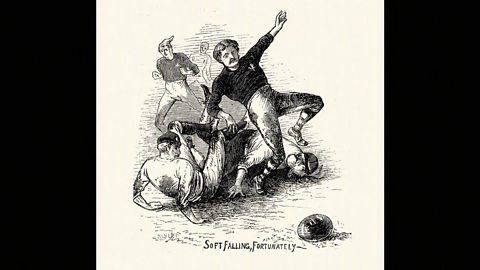
Some critics argued the idea was an insult to the game itself.
Football, they said, was played by gentlemen - why would anyone deliberately cheat?
Others mocked it as the "Irishman's motion" and dismissed it as unnecessary.
From laughter to legacy
When McCrum's idea reached football's rule-makers, many were unimpressed.
Some believed the punishment was too severe.
But football was changing. Matches were becoming faster and more physical.
Events on the pitch were already making the case for change.
Earlier that year, an FA Cup tie between Notts County and Stoke City had exposed a glaring flaw in the laws of the game.
A defender handled the ball on the line to prevent a goal and escaped with little more than a free-kick against his team.
The entire Notts County team simply stood shoulder to shoulder on the line, blocking the goal entirely. Stoke couldn't score and went on to lose the game.
To many observers, justice had not been served. The episode helped turn support towards McCrum's proposal for a far tougher sanction.
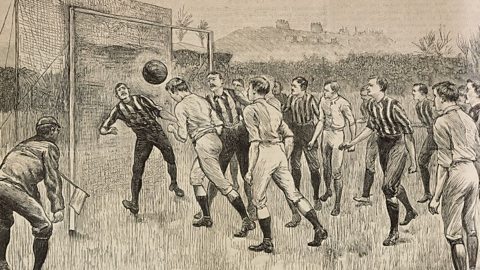
As controversial fouls continued to affect results, football's leaders gradually accepted the need for a way to punish cynical fouls and restore fairness.
In 1891, the penalty kick became part of the Laws of the Game.
Even then, the new punishment was a far cry from the penalty kicks we recognise today.
There was no penalty spot and no penalty area. Instead, players could place the ball anywhere along a line 12 yards from goal before taking their shot.
What had once been ridiculed became one of football's defining features.
The ultimate pressure
More than 130 years later, McCrum's invention has become one of football's greatest dramas.
For a penalty taker, there is nowhere to hide. One kick can earn a place in football history.
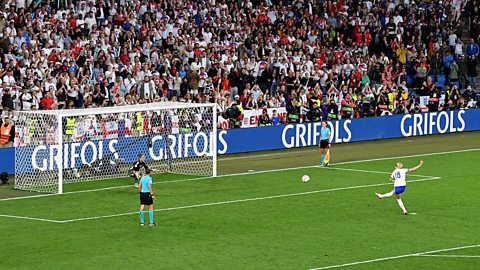
William McCrum's great-grandson, writer Robert McCrum, described a penalty as "a self-contained moment of enthralling dread… as if time itself stood still".
Heroes and heartbreak
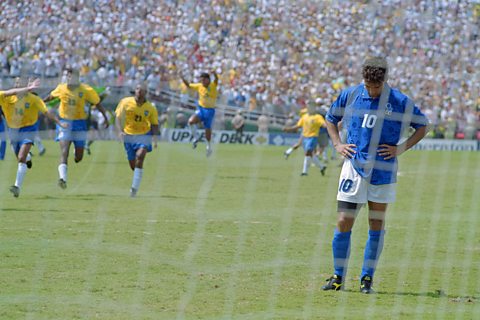
Ironically, McCrum never enjoyed the fame his invention would bring to generations of footballers.
He never saw the agonising beauty of a modern penalty shootout, where billions of people hold their breath at the exact same time.
When he died in 1932, he was known more in his native Armagh as "Master Willie" than as the man who had changed football forever.
A legacy that lives on
Yet every time a World Cup match goes to penalties, his legacy lives on.

All because of an idea dreamed up by a goalkeeper from County Armagh more than 130 years ago.
The crowd falls silent.
The goalkeeper waits.
Twelve yards. One kick. Everything on the line.
Discover more Irish inventors in the BBC NI Bitesize History Makers series.
Published in July 2026