Watch: Why did the Great Fire of London happen?
Rat: How did The Great Fire of London start?
(SINGS) Something’s burning, something’s burning. Fetch the ketchup, fetch the ketchup… BBQ! BBQ! It’s burnt and it’s crispy.Before ovens were invented all food had to be cooked on fires.
My grandma told me that, and her grandma told her all the way back to a rat who lived over 350 years ago, in the time of the Great Fire of London.
This is her story.
It all began in London – the country’s capital city.
There she is!
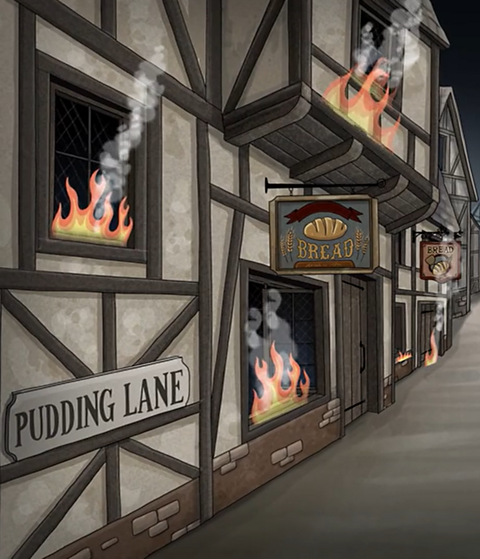
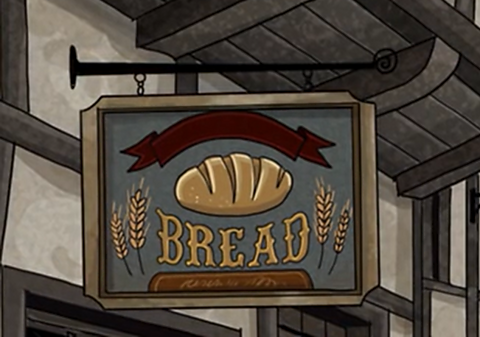
The story starts on Pudding Lane, in the home of Thomas Farriner, a baker who lived with his family above the bakery.
Electricity and gas central heating hadn’t been invented yet.
Thomas Farriner used fire for light, heating and – of course – baking.
Thomas Farriner: (YAWN) The bread’s ready – let’s put out all the candles before we go upstairs…
Child: Aw dad – it takes aaages to snuff out the flames.
If only somebody would invent electric lights, it would be a lot quicker.
Thomas Farriner: Well, c’mon hurry up then. The oven fire is already out.
If only somebody would invent electric ovens, it would be safer too.
Rat: But while they slept, a spark must have jumped out of the oven… the fire spread across the kitchen before anyone woke up.
Thomas Farriner and his family climbed out of the window, to the roof, and escaped to the neighbour’s house… all except their maid.
All the houses in London were so close together, which is a very good thing for escaping…But it also helped the fire to spread.
The houses were made of wood, so the fire gobbled up one house and moved quickly to the next.
Townspeople: Fire! Fire! We need to tell somebody about this… I wish someone would invent the telephone. And the fire brigade.Let’s get The Lord Mayor.
Lord Mayor, Lord Mayor, wake up!
There’s a fire on Pudding Lane!
Lord Mayor: Bah. I was having a lovely dream about bread.
London is always on fire… why are you bothering me?
Just put it out.
Rat: They tried desperately to put the fire out.
As well as pouring water from buckets, they used water squirters, which were a bit like giant water pistols.
They also used very basic tools.
People had to pump, really hard to spray the water out – and they didn’t work very well.
Luckily there was one way to put out the fire that nobody had tried yet.
It meant using something called a ‘fire hook’.
People used fire hooks to pull down the wooden houses in the path of the fire.
If you did that, the fire would run out of things to burn and eventually fizzle out.
But before they could use fire hooks, the people of Pudding Lane needed to ask the Lord Mayor if they were allowed to – and he had to say ‘yes’.
Townsperson: Ah, the Lord Mayor is here. He looks hungry…
Lord Mayor: Hello everyone. Good work, carry on!
Townsperson: Lord Mayor, we need you to say yes to something.
Lord Mayor: Is someone toasting fresh bread? Mmmm
Townsperson: We want…
Lord Mayor: Yes. Something with the toast?
Townesperson: To use…
Lord Mayor: Yes butter?
Townsperson: …fire hooks
Lord Mayor: Yes! Butter! Er, but no. No, no. Definitely not the fire hooks.
Rat: If only the Lord Mayor had let them use fire hooks!
With nothing to stop it, the fire raged on and on.
The wooden houses were fuel to the fire. It was a windy day, which blew the fire along.
It had been a very hot summer in London, so the wooden houses were dry and burned easily.
It looked like nothing could stop it.
What do you think happened next?
How did the Great Fire of London start?
- People used fires for heating, cooking and lighting.
- Houses were built from wood with thatched roofs. This meant they could catch fire easily.
- The fire started in a bakery, near Pudding Lane on the night of 2nd September, 1666.
- The bakery was owned by Thomas Farriner.
- A spark from one of his ovens probably started the fire.
What happened in the fire?
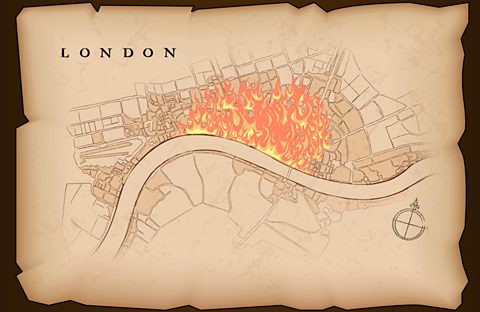
- The fire swept through London for four days. It destroyed 13,200 houses, 87 churches, and even St Paul’s Cathedral.
- People had to use horse-drawn carts to bring water up to the burning buildings because there were no proper fire engines.
- People tried to stop the fire spreading by blowing up buildings. This left a gap called a firebreak.
- At first the Lord Mayor of London, Sir Thomas Bloodworth, didn't allow people to make firebreaks.
- The fire stopped when the strong wind dropped and people used gunpowder to create firebreaks.
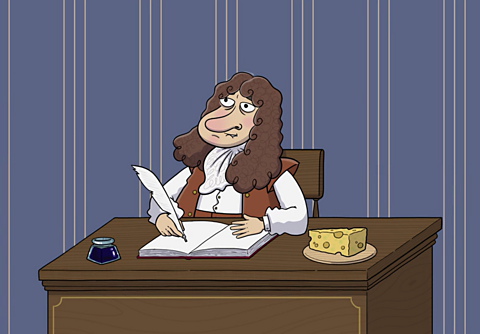
- Samuel Pepys kept a diary. He wrote all about the Great Fire in it.
Watch: Find out how the fire was put out
Rat: What happened during The Great Fire of London?
Writing things down in a diary helps people to remember important things.
I’d write down what I wanted to eat every day.
I learnt about diaries from my mum, who learnt from her mum who learnt from… you get the idea, all the way back in history… all the way back over 350 years ago, to 1666, the year of the Great Fire of London.
In those days when people wrote diaries, instead of using pens they dipped feather tips in ink and wrote with that instead.
Oh, there’s my ancestor!
The Great Fire of London started at a bakery in Pudding Lane, when everyone was asleep.
It spread quickly. News of the fire spread too, and it reached a man called Samuel Pepys – who worked for the king and liked to write in his diary.
Samuel Pepys: Dear diary, today is Sunday. Hmm. What else can I say?
Townsperson: Excuse me Mr Pepys sir, I bring bad news.
Samuel Pepys: Excellent, something to put in my diary! I mean, ahem, ‘what? bad news?’
Townsperson: I’ve heard that more than 300 houses have been burned by a fire, Sir, and it’s still going.
Samuel Pepys: I’ll take a closer look.
“Dear diary, today I decided to go and look at a big fire.
People were escaping from the fire and carrying their favourite things to safety.”
Rat: Samuel Pepys wanted to warn King Charles II.
So he took his boat down the river to the palace.
Here the king lived with lots of dogs that looked a bit like him.
Samuel Pepys: Your Majesty! I’ve come to tell you that London’s on fire!
Dog: Woof!
King Charles II: What’s up, Shmookums?
Hmm. We must command the Lord Mayor to pull down all the houses in front of the fire, so it has no fuel to burn, then the fire will die down.
Good boy.
Samuel Pepys: Why thank you, your highness.
King Charles II: Not you Pepys.
Rat: So, Pepys went to command the Lord Mayor to pull down the houses, while King Charles II followed up the Thames in his royal barge to see the fire for himself.
King Charles II: I thought I commanded the Lord Mayor to put this fire out. Why is it still here?
Hmm. We’ll get the army in to help pull down the houses with those big hooks.
When the fire hasn’t got wood to burn, it will soon fizzle out.
Rat: They used the fire hooks.
But they didn’t stop the fire.
Over the next two days, the fire doubled in size, and destroyed half the city of London.
People escaped to outside of the city, trying to save their most precious possessions.
Some people stored things in churches with thick stone walls, like St.Paul’s Cathedral.
But then even that burned down too.
It seemed there was nowhere safe from the fire, so everyone was really worried – including the diary writer Samuel Pepys.
Samuel Pepys: Dear Diary, I’m so worried.
I have the most delicious cheese but it might melt. How can I keep it safe from the fire?
Rat: He dug a hole to bury his precious cheese and wine in his garden.
Then he went to bed.
Suddenly, the wind changed direction and the fire started moving towards Pepys’s house.
Many more people left, including Samuel Pepys.
He took his diary and his gold, but he left his cheese and wine.
Samuel Pepys: Farewell London, I’ll be back. Take good care of my cheese!
Rat: Poor Samuel Pepys leaving his cheese behind.
I’m not sure I’ve much room for any more of this.
How much of London will be left when Pepys returns – and what about his cheese?
What happened after the fire?
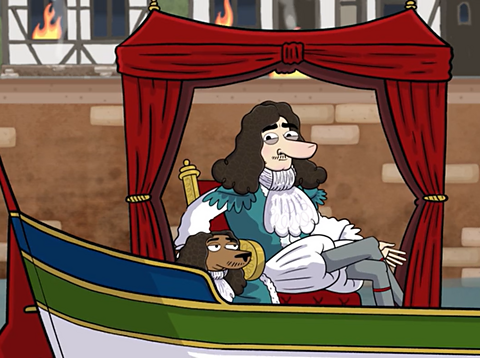
- So many homes were destroyed that King Charles II ordered the city to be rebuilt with houses made of stone and brick.
- Sir Christopher Wren was a famous architect. He designed the new St. Paul’s Cathedral which took 35 years to build.
Did you know?
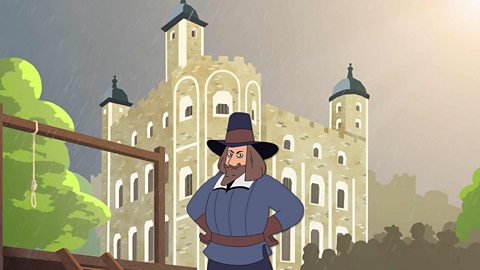
- The Tower of London survived the Great Fire.
- Although many homes were destroyed, not many people died.
Activity: Quiz – The Great Fire of London
More on Events beyond living memory
Find out more by working through a topic
- count2 of 7
- count3 of 7
- count4 of 7
- count5 of 7