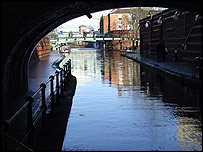
 | | Birmingham Canal |
The history of Birmingham cannot be understood without recognising its relationship to transatlantic slavery and profits it undoubtedly harvested, directly and indirectly, from an economic and industrial system of human degradation and displacement. With slave vessels arriving and departing around Britain in droves in the eighteenth century, it would have been impossible to avoid witnessing how cities like London, Bristol and Liverpool thrived upon the economic profits of the transatlantic trade. At the same time however, these cities were only the most visible examples involved in a trade that connected every corner of national life. 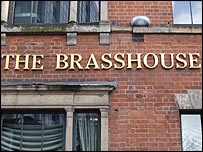 | | The Brasshouse |
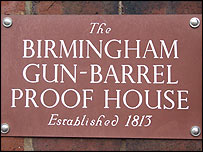
The degradations of ‘chattel’ slavery were motivated by the chance of vast material profits that drew in many ‘African merchants’ and plantation owners. But of course it also took a powerful industrial structure in place simply to make possible the forced removal of millions of men, women and children from the west coast of Africa to the Americas. Ship parts were needed to help transport the human cargo. Chains needed to be made to physically abduct people from their homeland. Guns needed to be forged to exchange with local Africans who had been corrupted by the West into dealing with European slave merchants. Huge quantities of brass wire and ‘Manilla’ bracelets were needed as trading tokens. Each of these trades had a strong Birmingham connection. Taking a major role in Britain’s status as the ‘workshop of the world’, Birmingham held centre stage in this ‘industrial connection’ to slavery. In the same year the ‘Abolition of the Slave Trade Act’ was passed, Letters from England (1807) by the poet Robert Southey publicly drew attention to Birmingham’s shameful legacy: If it be considered how large a proportion of that ingenuity is employed in making what is hurtful as well as what is useless, it must be confessed that human reason has more cause at present for humiliation than for triumph at Birmingham. A regular branch of trade here is the manufacture of guns for the African market […]No secret is made of this abominable trade; yet the government never interferes, and the persons concerned in it are not marked and shunned as infamous’ In fact, by the late eighteenth century, some of those involved in the profits from the transatlantic trade had started to be called to account for their actions. Samuel Galton Jnr. was cast out of his local Quaker society for his ‘immoral’ involvement in the gun making industry. His surprised indignation at this was a good indication of how traditionally accepted the ‘African trade’ had always been. One defense he made of his actions was that, after all, he was only following in the same trade as his father. 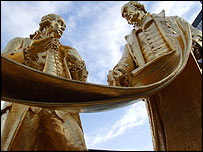 | | Matthew Boulton & James Statue |
Galton was not the only one locked in this shadowy world of profits gained from human suffering. In 1771, the Birmingham Aris’s Gazette advertised an auction to take place in the city of Lichfield: “Negro Boy from Africa, Supposed to be about ten or eleven Years of Age, he is remarkably strong, well proportioned, speaks tolerable good English” and was, unsurprisingly, “fond of labour”. Fortunately, such cases of outright exploitation in the local press seem to have been rare. Perhaps Birmingham’s most notorious example of a company which profited from slavery is the firm called ‘Hiatt’. Dating back to at least the early nineteenth century, ‘Hiatt’ was a local manufacturer advertising handcuffs, chains and ‘dog collars’. It was also known to be involved in making African slave restraints. In a powerful echo of history, the still existing ‘Hiatt’ firm has recently been faced with protests over its involvement in making handcuffs used in ‘Guantanamo Bay’, the notorious American detainment camp. 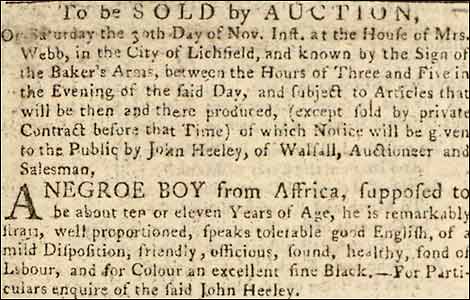 | | African slave for sale |
Such links show Birmingham cannot escape the history of its involvement with slavery. At the same time, it would perhaps be wrong and shortsighted to blame one firm alone for a history which possibly connected so many Birmingham trades. A more collective acknowledgement and learning about this aspect of our past would be a worthier response to injustices perpetuated by our role within the development of a bloodstained empire. CONNECTING HISTORIESIf you want to find out more about Birmingham's links to the Transatlantic slave trade, go to:
www.connectinghistories.org.ukAll images reproduced by permission of the 'Connecting Histories Project', Birmingham Central Library.
Photographs by Dr Andy Green & Mandisa Gordon. |