| 24 September 2014 |

| |
| BBC Homepage | | |
| |||
| Contact Us | | |
Local HistoryYou are in: Berkshire > History > Local History > A History of Reading  Author Stuart Hylton A History of ReadingA new book on a thousand years of history in Reading and its surrounds reveals that you may very well have walked in the footsteps of King Alfred, a hoard of pillaging vikings and an ill-fated Irish troop supporting King James II. Reading may be at the heart of the hi-tech industry's Silicon Valley, but did you know that in medieval times the town was the "centre of international pilgrimage"?
Or that if you've passed through the town centre, you're walking on a bloody battle ground where King Alfred fought off hoards of pillaging Danes? Author Stuart Hylton has spent a year researching a 1000 years of fascinating Reading historical events and stories, and has recently published a new book, simply titled A History Of Reading. Here he speaks to BBC Radio Berkshire's Henry Kelly. Listen to the full interview here or read extracts below: Help playing audio/video Henry: I'm inclined to agree with Sir John Betjeman that "no town in the south of England hides its attractions more successfully from the visitor"."That's very much the case, when I came to the town in 1980 I started thinking that it was largely a 19th century industrial town with no distinct history to it. "But as I got deeper and deeper into it I discovered that there was a 1000 years of fascinating history and that the town was at the centre of the nation's development for large parts of it." This book kept me up last night, it's a fascinating study and I personally had no idea about Reading's place in the history of this country. Transport for example: it's stage coaches and its waterways giving way to the railways."And at every stage in the proceedings those who were threatened by it were complaining that this was going to be the ruination of the town. The canals complained about the turnpikes and the turnpikes complained about the railway and at each stage hell and damnation was going to be visited on the town by the new arrival." 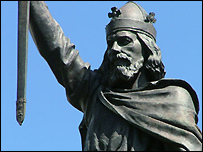 Statue of King Alfred in Winchester Also there were so many battles here."A 1000 years ago King Alfred was fighting in what are now the streets in the centre of Reading with the Danes who'd invaded and made a fortified camp there." How did the Vikings get here?"Two lots came. One came up the river, pillaging as they went and the other one came over land and they assembled quite a substantial little army and put fortifications in." I don't mean to be rubbishing Reading but really there are so many things here and yet I come out and it's a pretty ordinary contemporary town. You wouldn't believe - looking at it - that it has this extraordinary history."If you know where to look, there's a huge amount of history still there. As John Betjeman said it's well hidden. 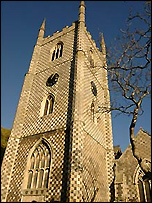 St Mary's Church in Reading "But there's a 1000 years of history, starting with St Mary's Church, which is at the heart of where the town first grew up. We have the remains of an abbey which was bigger than Westminster Abbey and Winchester Cathedral. "It was the centre of international pilgrimage, kings and queens used to come here. "One of the kings of England Henry I is actually buried there but nobody knows quite where and it was a centre for parliament to meet. "It was hugely important in the life of the nation." And then of course we have the industry, we have the coming of the railways and we have the beer, bulbs and biscuits."The beer was Simmonds, a local brewing family, the bulbs were Sutton Seeds but they sold bulbs as well, and the biscuits were Huntley & Palmer, which were the largest employer in the town for many years. "They (Huntley & Palmer) had their own railway system. They had a wonderful system with steamless locomotives that used to go inside the factories. They didn't have fire to make the steam but they used to get steam out of a boiler and then just drive into the factory without polluting it at all. 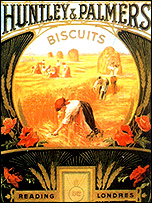 Huntley & Palmers poster "Huge parts of Reading like Newtown grew up on the back of Huntley & Palmers. Huge amounts of housing were built by them, community facilities and so on." You've also done a history of the surrounding areas, one of the places is where BBC Radio Berkshire and BBC Monitoring is based - Caversham park. How important is it in the history of Reading?"Hugely. It goes back to the doomsday book, it was first done by a man called Walter Gifford who was a relative of William the Conqueror. And for a time the whole of England was governed from Caversham park estate. "What happened was that in the year 1216 King John died and left his nine-year-old son Henry on the throne and someone had to run the country while he was growing up. "They chose an elder statesman of the time called William the Earl Marshall and he ran the country for a couple of years, eventually from Caversham Park. He was a very old man in his 80s and he gradually realised his time was coming so he brought the whole of the royal household back to Caversham Park which was his estate. So for a period in the 13th century England was ruled from Caversham Park. 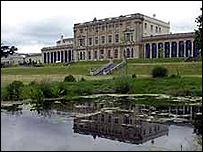 Caversham Park "There's a enough history in Caversham Park alone to make a royal soap opera. The son-in-law of Edward I lived here and it's surprising how many of these people were linked to the most powerful in the land and also how many of them died very stickily. "The son of Edward I lived here, he died at the battle of Bannockburn. "Warwick the Kingmaker, the Earl of Warwick - who not only put one king on the throne but deposed him and then put another one on the throne - he was killed in another battle. "And then there was the brother of Edward IV, whose wife owned this place and he was arrested for treason and ended up famously in the Tower of London being drowned in a barrel of wine." So from the Vikings right up to modern times, this town and places like Caversham have had a thread running through British history."You can almost tell the story of British history through Reading. "You look at the so-called Bloodless Revolution when King James II was overthrown in 1688, it wasn't bloodless because Reading had a battle fought in its streets and the two opposing armies met and ended up fighting in the market place and I think about 50-odd of the Irish troops who were supporting King James were killed there. "Reading people actually joined in the battle shooting at them from their houses!" And then we have the gruesome side, we have the jail, the public executions..."Absolutely, thousands of people used to come along, they used to do them at the front of the jail. It got into the tens of thousands of people, they certainly packed people in." 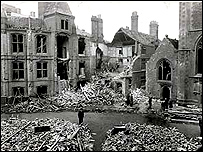 Reading town hall after the 1943 air raid How did it fare during the war?"It was a funny place during the war because on the one hand it was deemed to be a place suitable for relocating people from London to protect them from bombing, but at the same time they said it was in danger of being bombed itself because it's a major industrial centre. "In fact it survived relatively unscathed until 1943 when there was a bombing raid which blitzed large parts of the town centre." A History Of Reading by Stuart Hylton is out now.last updated: 31/03/2008 at 00:26 SEE ALSOYou are in: Berkshire > History > Local History > A History of Reading
|
| | About the BBC | Help | Terms of Use | Privacy & Cookies Policy |